5 DIY Grooming Mistakes That Can Send Your Pet to the Vet
Home grooming is mostly safe, but a few common mistakes, from cutting the nail quick to shaving a double coat, can cause real injuries. Here's how to avoid them

A lot of routine pet grooming is genuinely safe to do at home — brushing, a bath, a light trim. The mistakes that actually send pets to the vet tend to come from a small, specific list of techniques that look simple but aren't as forgiving as they seem, especially once a squirming, furry animal is involved instead of a still, hairless practice surface.
The misconception: if the tools are the same, the skill level barely matters
Clippers, scissors, and cotton swabs are the same basic tools professional groomers use, so it's easy to assume a video tutorial closes most of the gap. What the videos don't show is how differently those tools behave on a squirming, furry, unpredictable animal compared to a still demonstration paw — and a handful of specific mistakes account for most of the injuries that happen at home.

Why these five habits cause real injuries
1. Cutting into the nail quick. The quick is the blood vessel and nerve that runs through the center of the nail — visible as a pink line in light-colored nails, but completely hidden in dark or black nails. Cut into it and the nail bleeds, often more than expected, and it's painful enough that some pets become nail-trim-averse afterward. Without something on hand to stop the bleeding, a nicked quick can also get infected.
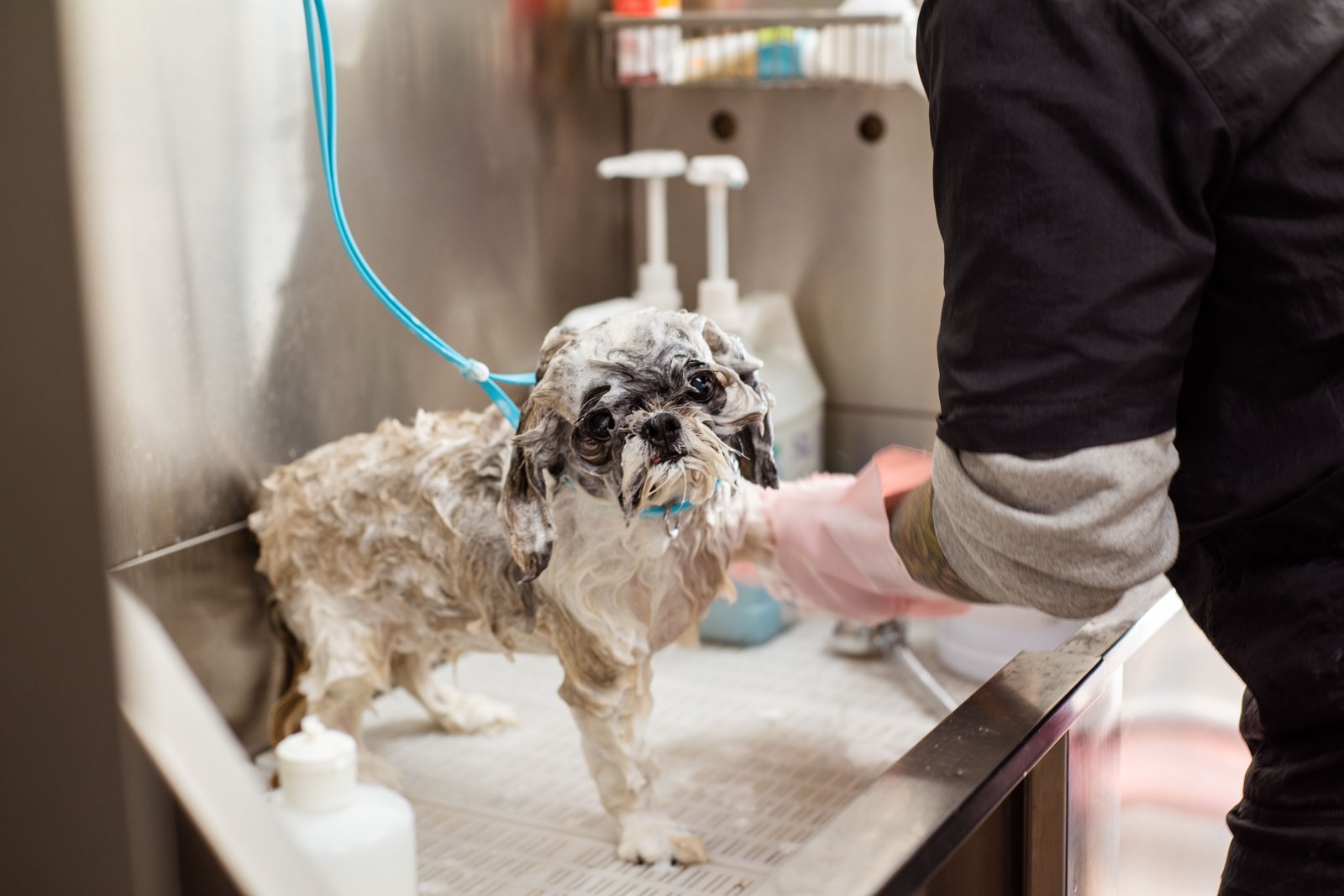
2. Using human shampoo. Human skin sits around pH 5.5, but dog and cat skin runs higher, closer to neutral or slightly alkaline depending on the species. Human shampoo is formulated for the more acidic human range, and using it on a pet strips the skin's protective acid mantle, leading to dryness, irritation, and a higher chance of secondary skin infection. Some human products also contain ingredients, like certain essential oils, that are outright toxic to cats.
3. Cutting out mats with scissors, close to the skin. Severe mats can fuse tightly enough to the skin that the skin tents up along with the fur. Scissors used to cut a mat like this can just as easily cut the skin underneath, especially in loose-skin areas like the armpits, groin, and base of the ears, without the groomer realizing how close the blade actually is.
4. Pushing cotton swabs into the ear canal. A swab pushed past the visible part of the ear doesn't reliably remove debris — it often packs it deeper, and the ear canal has a bend that makes it easy to injure the eardrum with too much pressure, especially on a pet that moves mid-cleaning.
5. Shaving a double coat down to the skin. Breeds with a double coat, an insulating undercoat plus longer guard hairs, use that structure to regulate temperature in both hot and cold weather. Shaving it off doesn't just remove length; the coat can grow back unevenly or with a different texture, sometimes permanently, and the skin loses protection against sunburn and overheating in the meantime.
The actual fix: safer versions of each
- Trim nails in small amounts, a little at a time, and keep styptic powder on hand in case the quick gets nicked.
- Use a shampoo formulated for dogs or cats specifically — never a human product, and double-check any product's safety for cats specifically before use.
- Use clippers with a guard, or have mats professionally removed, rather than working scissors in close to the skin.
- Clean only the visible, outer part of the ear with a vet-approved cleanser and a cotton ball — never a swab pushed into the canal.
- Brush out a double coat instead of shaving it, and talk to a groomer or vet before a full shave-down, even in summer.
FAQ
I already nicked the quick, what do I do now?
Apply styptic powder (or in a pinch, cornstarch) with firm pressure for about a minute. Most nicks stop bleeding quickly and don't need a vet visit unless bleeding continues past several minutes or the paw looks infected afterward.
Is any human shampoo safe in an emergency?
A plain, fragrance-free baby shampoo is a safer one-time substitute than an adult formula, but it's still not a long-term replacement for a pet-formulated shampoo.
Most of these mistakes are recoverable with basic first aid, but some aren't. A deep skin cut from mat removal, an ear that seems painful or off-balance after cleaning, or a nail bleed that won't stop are all reasons to call a vet rather than keep managing it at home, since what looks minor at the sink can turn into an infection or a lasting injury without the right follow-up care.
Related articles
 3 min read0 views
Why Human Shampoo Isn't Safe for Dogs and Cats
Baby shampoo feels like a harmless bath-day backup, but pet skin sits at a different pH than ours. Here's why that swap causes real, cumulative skin damage.
 4 min read1 views
Your Dog's Floppy Ears Are Secretly Fueling Ear Infections
Floppy ears aren't just cute — they trap moisture and set up recurring infections. Here's the real mechanism, and the cleaning technique that actually helps.
 5 min read0 views