Cat Overgrooming Isn't Always About Stress
Bald patches from overgrooming can mean stress, allergies, or hidden pain in cats — here's how to tell the difference and when a vet visit matters.
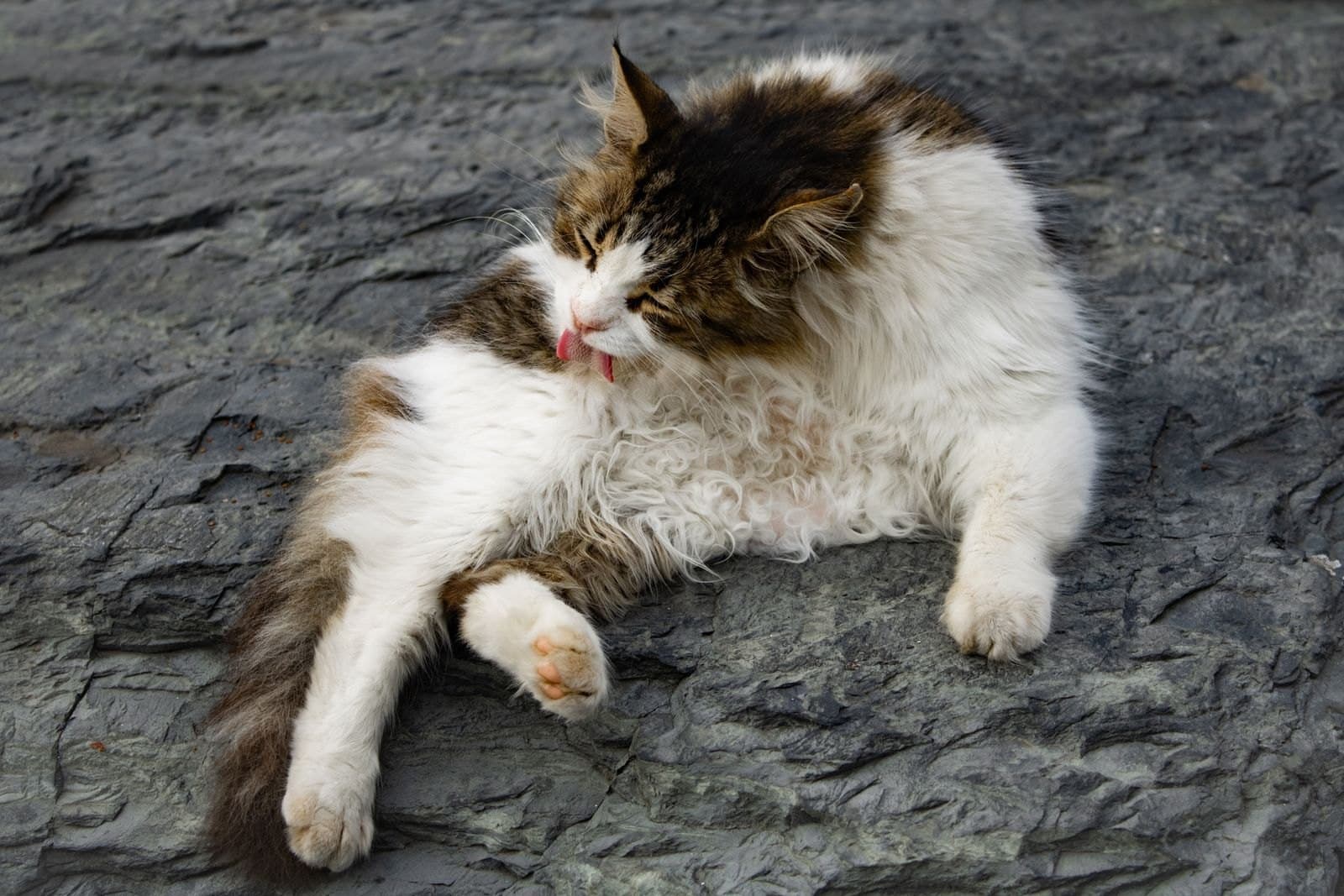
You spot it while trimming nails or during a belly rub: a patch of thin fur on the inner thigh, or a strip of skin along the abdomen where the coat should be. The first instinct for most owners is dismissal, not concern — cats are famously fastidious, so a little extra licking reads as personality, not a problem. But hair loss from grooming doesn't happen from normal grooming. If a cat is licking enough to remove fur, something is driving that behavior past its usual point, and the three most common drivers need three different responses.
The misconception: "she's just a really clean cat"
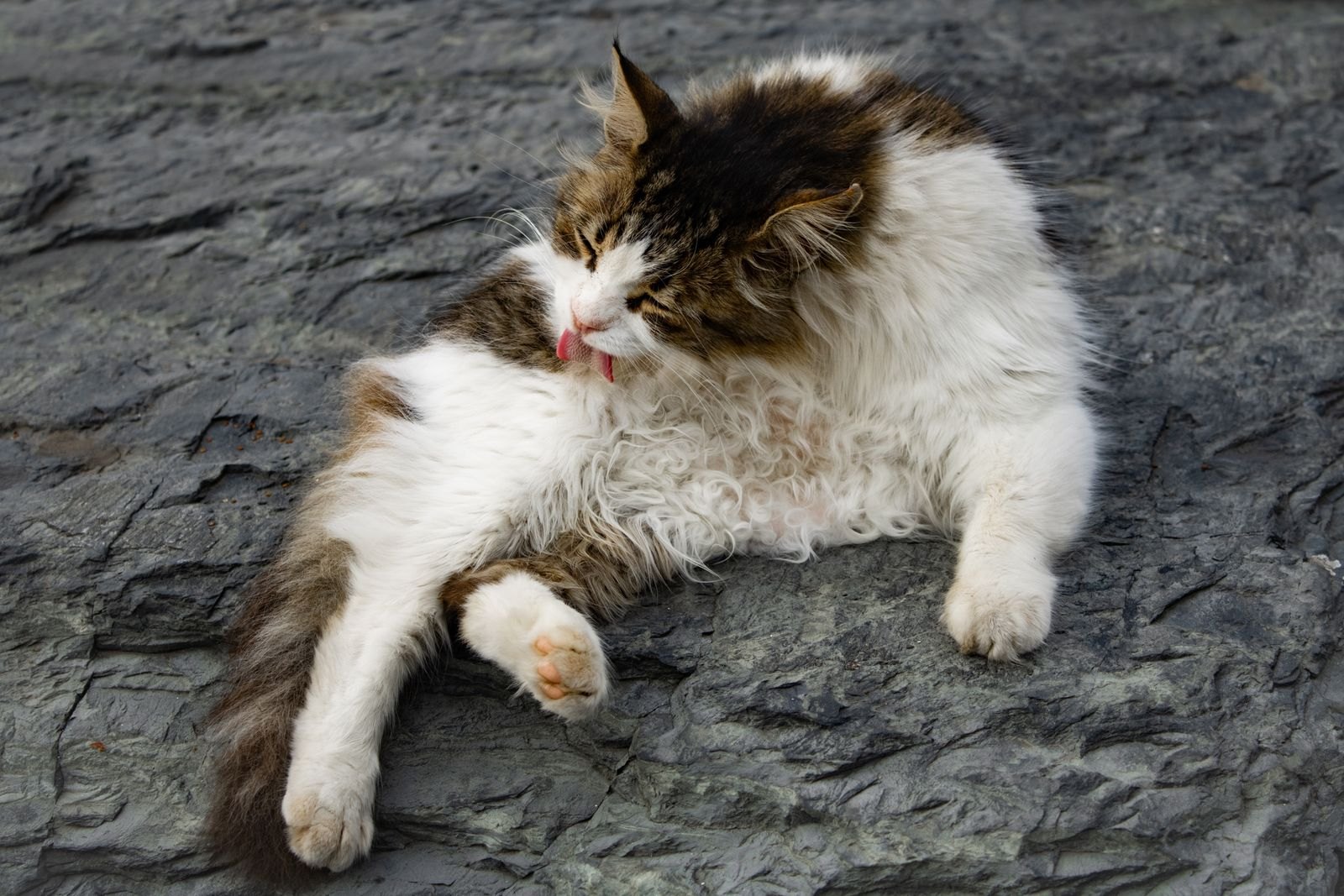
'My cat is just extra clean' and 'it's probably just a phase' are the two explanations owners reach for most often when they notice thinning fur, and both miss that overgrooming is a symptom, not a personality trait. Cats groom in private more than owners realize, and a cat who's overgrooming is often skilled at hiding the evidence — by the time bald patches are visible on the belly, inner thighs, or legs, the behavior has usually been going on for a while. Treating it as harmless fastidiousness means the underlying driver keeps running unaddressed, whether that driver turns out to be stress, an allergy, or pain.
Why it's actually three different problems wearing the same disguise
The first driver is stress or anxiety, and the mechanism is what veterinary behaviorists call a displacement behavior: grooming is a normal cat behavior that gets redirected and intensified when a cat is in a state of conflict or anxiety it can't otherwise resolve. Licking lowers arousal enough to feel self-soothing, and over time the behavior can become independent of whatever triggered it in the first place — a cat can keep overgrooming long after the original stressor (a new pet, a move, a schedule change) has resolved. This pattern, known as psychogenic alopecia, is typically diagnosed only after other causes have been ruled out, not assumed from hair loss alone.
The second driver is allergic dermatitis, which is itch-driven rather than stress-driven. Flea allergy dermatitis is a hypersensitivity reaction to flea saliva severe enough that a single bite can trigger intense itching in a sensitive cat, and because cats groom fleas away efficiently, owners often never see one. Food allergy and feline atopic skin syndrome (the current veterinary term for environmental allergies to things like pollen or dust mites) can cause the same itch-driven licking. All three tend to come with real pruritus and, often, visible skin changes — redness, small crusted bumps, or scabs — underneath the hair loss.
The third driver is pain referred to a nearby body region: a cat licking heavily at one focused area because something underneath actually hurts. Overgrooming concentrated on the lower belly or groin can be linked to feline idiopathic cystitis, a painful bladder condition, sometimes alongside straining to urinate or urinating outside the litter box. Overgrooming focused right over a joint can be linked to arthritis, since cats lick and chew at areas that hurt. Cats are also known for hiding pain as a survival instinct, so focal overgrooming can be one of the only visible clues something is physically wrong.
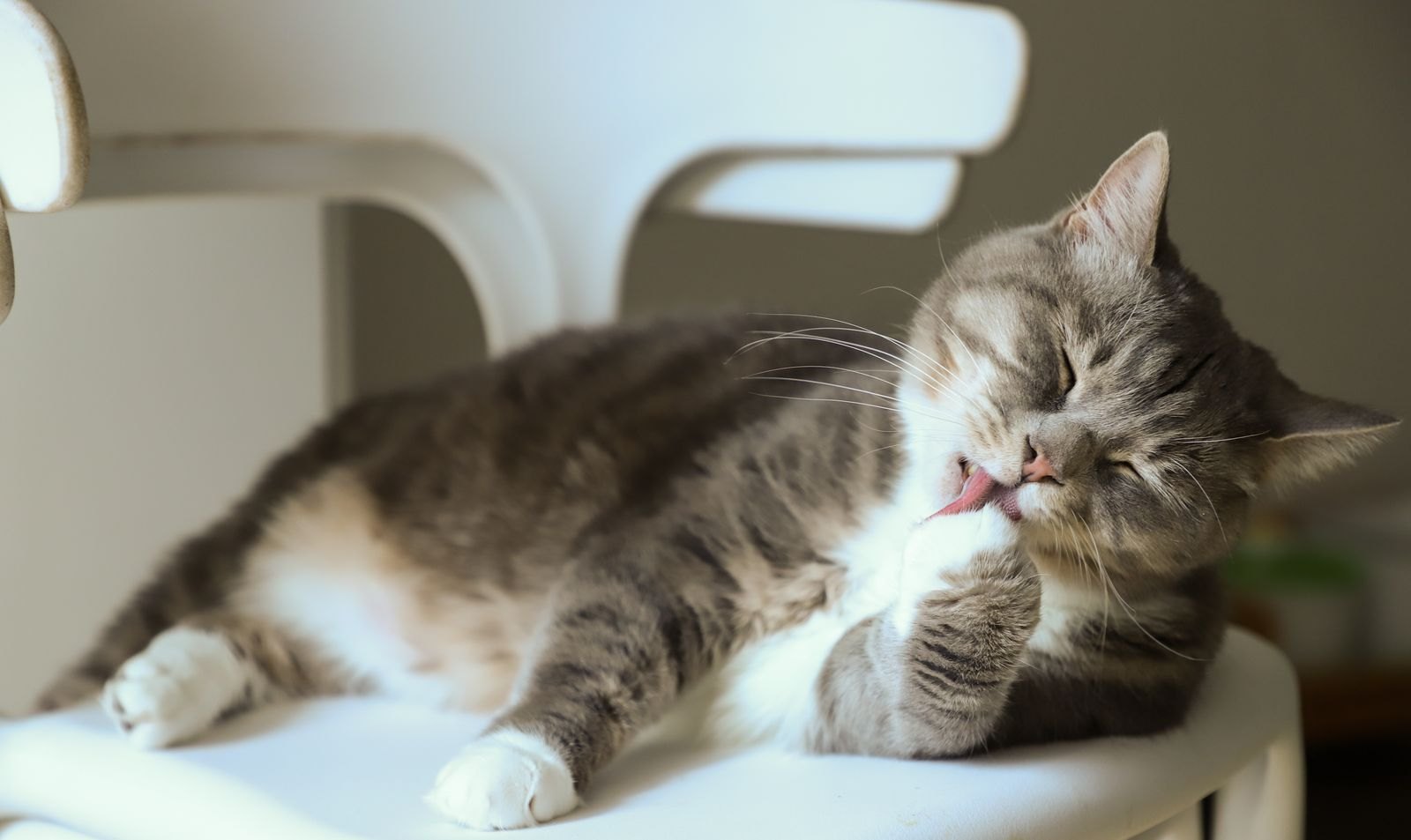
All three mechanisms can leave nearly identical bald patches, which is exactly why the hair loss itself isn't the useful signal. What matters more is the pattern: symmetric on both sides of the body versus focused on one spot, clean skin underneath versus visible redness or scabs, and a gradual build-up versus a sudden onset.
The actual fix: match the response to the pattern, not the hair loss
- Symmetric, clean-skinned, with an obvious trigger. Bald patches on both sides of the body, no redness or scabs, and a stressor you can point to (a new pet, a move, a change in routine) suggest behavioral overgrooming — environmental enrichment, a more predictable daily routine, and a calming pheromone diffuser for cats are reasonable first steps.
- Redness, scabs, or visible fleas. These point toward allergic dermatitis. Start with strict flea control, since flea allergy is the most common cause and the easiest one to rule out, then talk to a vet about a broader allergy workup — food trial or environmental allergy testing — if flea control alone doesn't clear it up.
- Sudden onset, or licking concentrated on one area. This combination shouldn't be assumed behavioral. A vet visit, including a urinalysis to check for cystitis or a joint exam to check for arthritis, is the right next step before trying to manage it as stress.
FAQ
Can I just wait and see if it gets better on its own?
A little patience is reasonable for mild, longstanding, symmetric thinning with no skin changes, but sudden or worsening hair loss, or any licking to the point of skin damage, is worth a vet visit rather than a wait-and-see approach — self-diagnosing it as 'just stress' can delay treatment for pain or an allergy that's actually driving it.
Is psychogenic alopecia common?
It's real, but it's diagnosed far less often than owners assume relative to medical causes, in part because vets treat it as a diagnosis of exclusion — allergy and pain sources are typically ruled out first, not assumed second.
None of this is meant to replace an exam. A vet or veterinary dermatologist can examine the skin directly, run a urinalysis or allergy testing, and tell you which of these three patterns actually fits your cat — hair loss alone can't.
Related articles
 4 min read0 views
It's Not Spite — Here's Why Cats Actually Skip the Box
A cat avoiding the litter box isn't getting revenge. Here's the real checklist of causes, from box setup to the medical issues that need a vet first.
 4 min read0 views
4 Reasons Your Cat Scratches the Couch (It's Not Spite)
Furniture scratching isn't bad behavior to punish — it's a real feline need aimed at the wrong surface. Here's why cats do it and what actually redirects it.