Why Does My Cat Bite Me While I'm Petting Her?
The switch from purring to biting isn't random moodiness. Here's the overstimulation threshold behind it, the warning signs, and how to keep petting comfy.
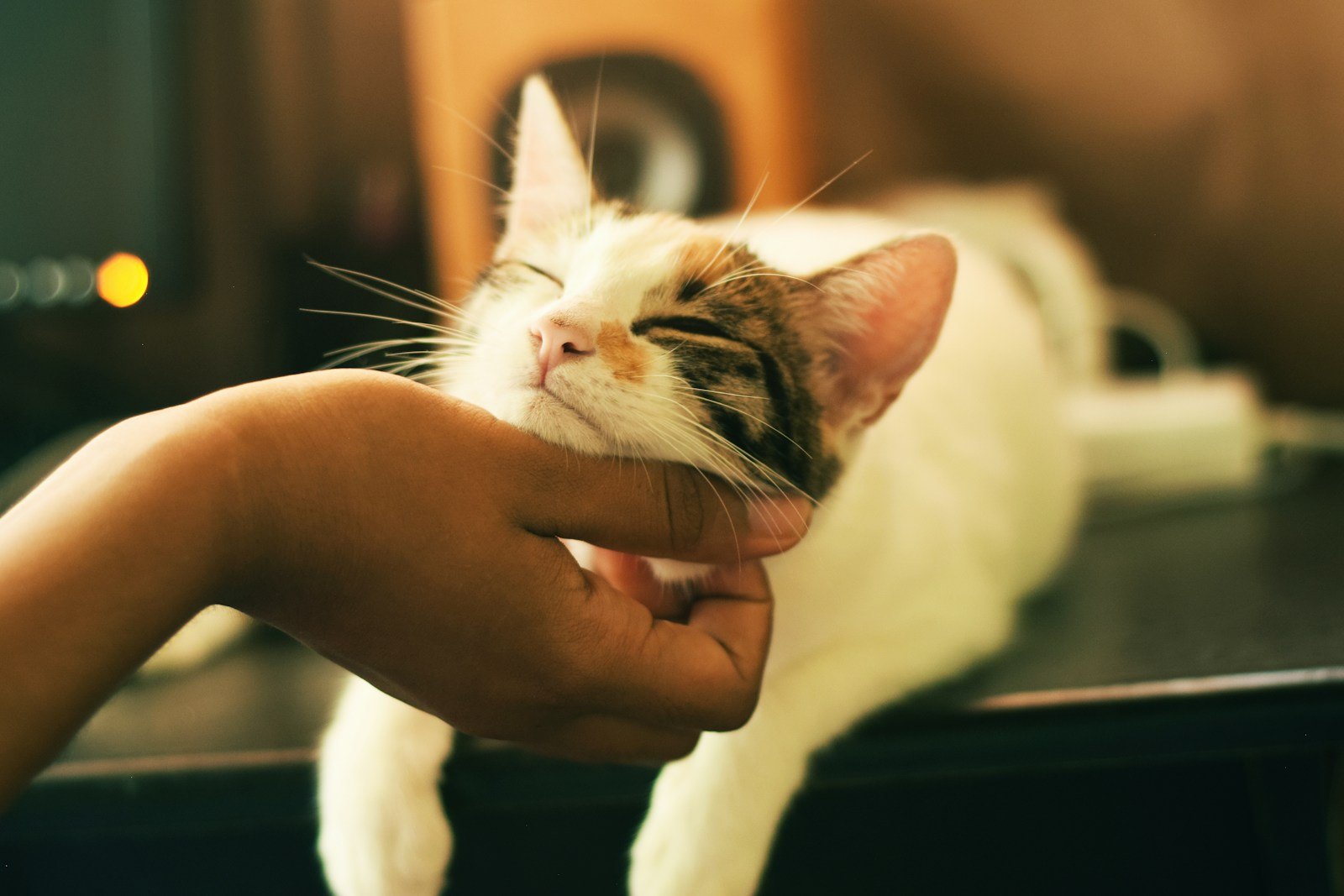
One second a cat is leaning into your hand, purring — the next, they've grabbed your wrist with their teeth and bolted off the couch. It happens often enough that most cat owners have a version of the story, and the usual conclusion is that cats are just unpredictable, or that this particular cat 'doesn't really like' being petted despite asking for it moments earlier. Neither is quite right. This switch has a name, a mechanism, and a set of warning signs that show up well before the bite — most owners just haven't learned to read them yet.
The misconception: it's a random mood swing
Because there's rarely an obvious trigger from the owner's side — no rough handling, no sudden movement — the sudden shift from affectionate to defensive reads as unpredictable. Some owners land on the idea that the cat is simply moody or contradictory: seeking contact one moment, rejecting it the next, for no discernible reason. That framing treats the bite as noise rather than as information the cat was actually trying to communicate for a while before it happened.
Why it actually happens: overstimulation, thresholds, and missed warning signs
Veterinary behavior sources have a specific name for this pattern: petting-induced aggression, sometimes called overstimulation aggression. It's a recognized, well-documented feline behavior, not evidence of a contradictory personality. According to the Humane Society of Huron Valley, the underlying mechanism is a sensitivity threshold — the contact feels genuinely good at first, but repetitive touch in the same spot becomes irritating past a certain point, similar to how any repeated physical sensation can stop feeling pleasant the longer it continues, even if it started out welcome.
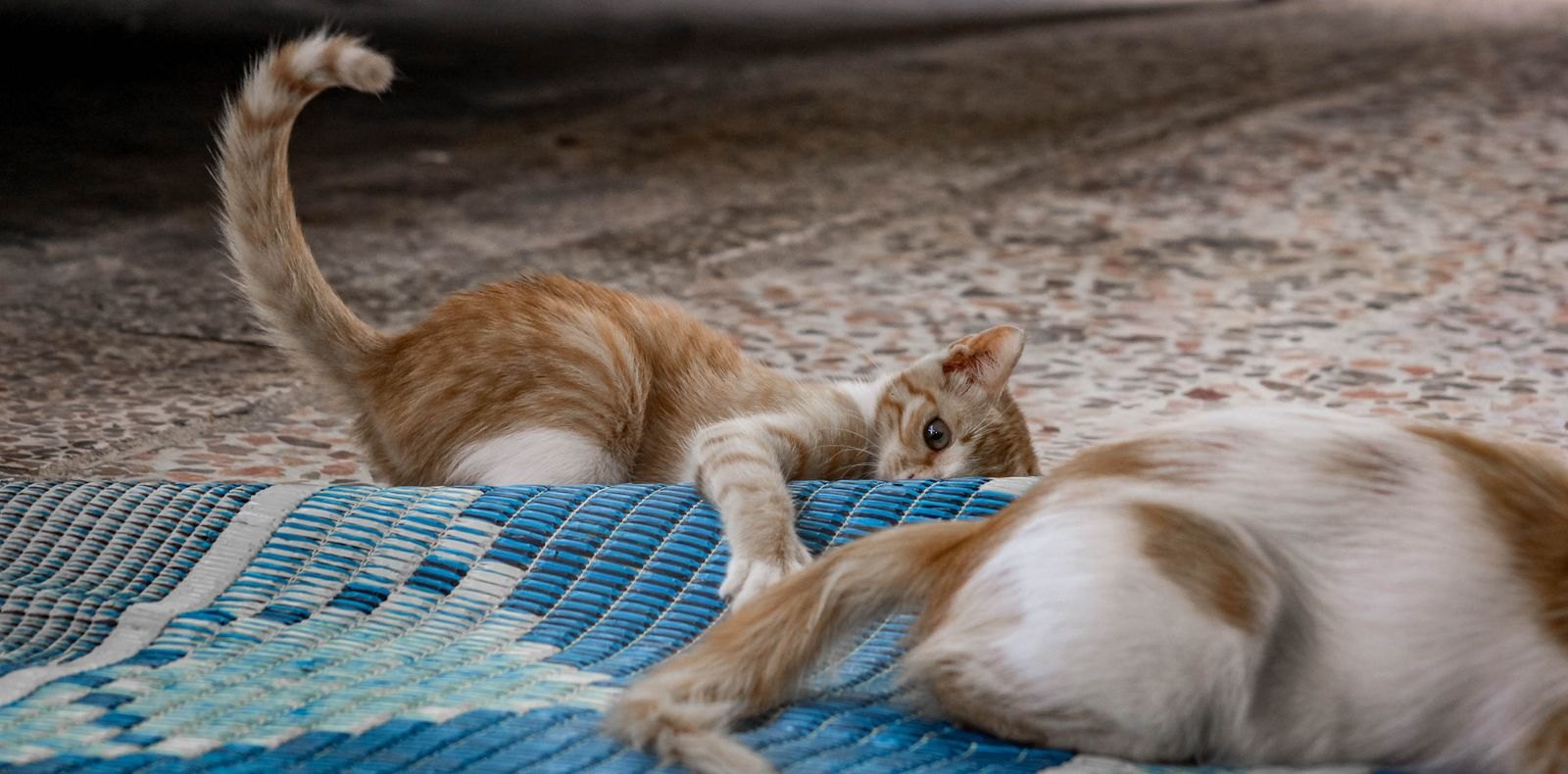
What makes this pattern look 'sudden' to owners is that cats give a sequence of escalating warning signs before a bite, and most of those signs are easy to miss if you're not looking for them: ears shifting back or turning sideways from their relaxed position, the tail twitching and then lashing faster, skin rippling visibly along the back, pupils shifting away from their neutral, relaxed state, the body stiffening or briefly freezing, and the cat's gaze locking onto the hand that's moving across their fur. The bite isn't the cat skipping straight to aggression — it's the last step in a sequence that started several signals earlier and simply went unanswered.
There's an important exception worth ruling out: a cat that's newly or increasingly reactive to touch, especially in a specific spot, may be reacting to pain rather than pure overstimulation. Arthritis, dental disease, or a sore area from an injury can produce a reaction that looks identical to overstimulation at first glance, which is why a pattern that's new or getting worse deserves a vet visit before it's chalked up to personality.
The actual fix: read the sequence, not just the bite
- Learn your specific cat's threshold. Pay attention to roughly how many strokes or how much time typically passes before you see the early warning signs (tail starting to twitch, ears shifting), and stop petting just before that point rather than continuing until the cat has to escalate.
- Favor lower-intensity contact for touch-sensitive cats. Short strokes on the chin or cheeks tend to be tolerated far longer than full-body petting down the back and sides — if your cat has a low threshold, keep contact to these areas more often.
- Let the cat initiate, and keep sessions short and frequent. A cat that approaches and settles into your lap on their own terms generally tolerates more contact than one that's picked up or petted on your schedule.
- Add more daily interactive play. Wand toys and chase-and-catch games give cats an outlet for predatory and physical energy; built-up frustration from too little play can lower the overstimulation threshold, making petting sessions end faster than they otherwise would. A long-lasting treat puzzle helps on days when active play time is short — the foraging effort taps into the same predatory drive and keeps a cat's baseline arousal lower before petting even starts.
- Never physically correct a bite. Tapping the nose or scruffing doesn't teach the cat anything useful about the threshold — it just adds stress to an already overstimulated cat and can damage trust. Redirect to a nearby toy instead and simply end the petting session.
FAQ
Is petting-induced aggression the same thing as my cat just being moody?
No — it's a threshold-based physical response with identifiable warning signs, not an unpredictable mood. Once you learn your cat's specific signals, the pattern usually becomes very predictable rather than random.
My cat never used to bite during petting and now does — is that a bigger concern?
A new or worsening pattern is worth a vet visit specifically to rule out pain, since arthritis, dental disease, and other sources of discomfort can produce touch sensitivity that looks like overstimulation at first.
If biting during petting is new, sudden, or shows up alongside other changes — flinching when picked up, reduced appetite, hiding more than usual — have your vet examine your cat before assuming it's purely behavioral. Ruling out pain first means any behavior changes you make afterward are actually addressing the real cause.
Related articles
 4 min read0 views
It's Not Spite — Here's Why Cats Actually Skip the Box
A cat avoiding the litter box isn't getting revenge. Here's the real checklist of causes, from box setup to the medical issues that need a vet first.
 4 min read0 views
4 Reasons Your Cat Scratches the Couch (It's Not Spite)
Furniture scratching isn't bad behavior to punish — it's a real feline need aimed at the wrong surface. Here's why cats do it and what actually redirects it.