4 Signs Your Cat's Home Needs More Vertical Space
A bigger apartment doesn't automatically mean a happier cat. Here's why height matters more than floor space, and how to add it without a full room makeover.
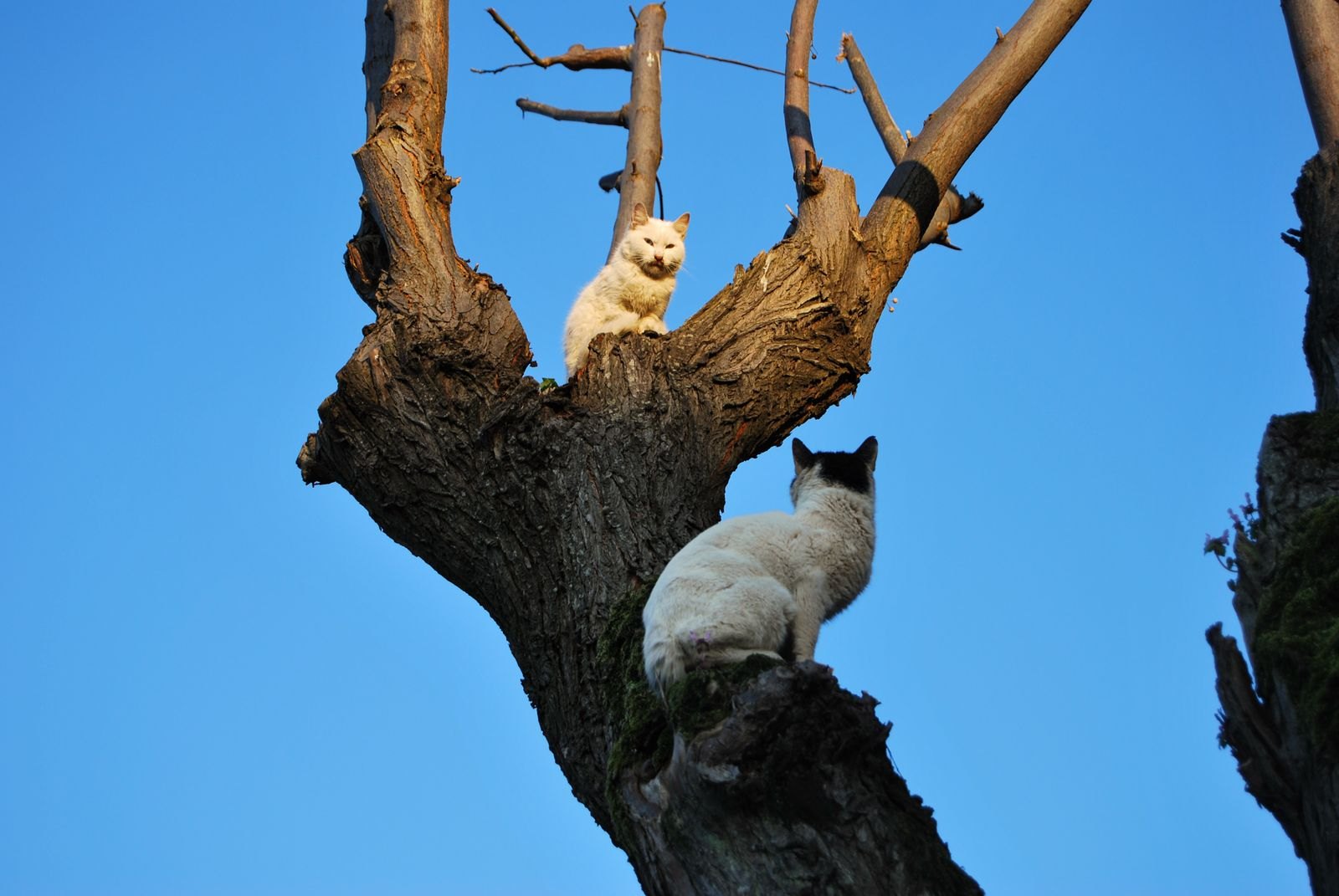
It's easy to think about a cat's living space the way you'd think about your own — square footage, floor plan, how much open room there is to move around in. Cats don't measure their territory the same way. A studio apartment with real vertical options can offer a cat more usable territory than a much bigger home with everything confined to the floor.
The misconception: more floor space, more toys, more enrichment
The instinct is to enrich a cat's environment by adding things at ground level — more toys scattered around, a bigger room to roam in. Those things aren't wasted, but they're solving for the wrong axis. A cat's sense of having enough territory is shaped more by usable height and vantage points than by how much open floor is available, which is why two homes with identical square footage can feel very different to the cats living in them depending on what's available to climb.
Why it's actually about vantage point, not just novelty
An elevated position lets a cat observe its surroundings from a spot that feels defensible — it can see what's approaching before it's close, which matters even in a calm household, and matters a lot more in a multi-cat home where floor-level space is something cats have to negotiate or compete for. The AAFP and ISFM (the American Association of Feline Practitioners and International Society of Feline Medicine), in their widely cited consensus guidelines on feline environmental needs, specifically name access to key resources that a cat can reach without confrontation as one of the core pillars of a healthy home environment for cats — and vertical space is one of the most space-efficient ways to deliver that when floor area itself is limited.
In multi-cat households specifically, elevation effectively multiplies the usable territory inside the same square footage. Instead of every cat competing for the same handful of ground-level resting spots, height lets cats spread into their own separate zones — one cat on a window shelf, another on top of a cat tree across the room — without anyone having to give up ground.
The actual fix: add height, not just more stuff
- A multi-level cat tree or wall-mounted shelving system, tall enough that a cat can fully stretch out at the top perch — a cramped top platform defeats the purpose. Positioning it near a window adds visual stimulation on top of the height itself, which increases how much a cat actually uses it.
- In multi-cat homes, apply the litter box "n+1" logic to resting spots too — enough separate elevated positions that no single cat has to negotiate or wait for access to the only high spot in the house. One shared cat tree in a home with three cats often isn't enough, even if it looks impressive.
- Stability matters as much as height. A tall but wobbly, poorly anchored tower can become a stress source rather than a relief from one — cats want a vantage point that feels secure, not just tall, so check that any tower or shelf is properly weighted or mounted before counting on it.
FAQ
Do I need to buy an expensive cat tree, or will shelving work?
Either works — what matters is height, stability, and a comfortable landing spot at the top, not the price point. Wall-mounted shelves are often more space-efficient in small apartments than a large freestanding tree.
My cat already has a cat tree and doesn't use it much — now what?
Placement is usually the issue before the furniture itself is. A tree tucked in a corner with no view gets ignored far more often than one positioned near a window or somewhere the cat can still see the main activity of the household from above.
If added vertical space doesn't ease visible stress signs — hiding more than usual, over-grooming, appetite changes, or new litter box avoidance — that's a reason to talk to a vet or a certified feline behaviorist rather than adding more furniture. Those signs can point to a medical issue or a stress source that environment changes alone won't resolve.
Related articles
 5 min read0 views
Slow Feeders vs. Raised Bowls: What Fast Eating Really Risks
Raised bowls were once recommended to prevent bloat in large dogs — research says otherwise. Here's what eating speed really means for dogs and cats.
 4 min read0 views
Skipping a Safe Space Is Secretly Worsening Storm Fear
Comforting a scared dog doesn't reward the fear, but skipping a safe space during storms and fireworks can let that fear quietly build. Here's what helps.