Slow Feeders vs. Raised Bowls: What Fast Eating Really Risks
Raised bowls were once recommended to prevent bloat in large dogs — research says otherwise. Here's what eating speed really means for dogs and cats.
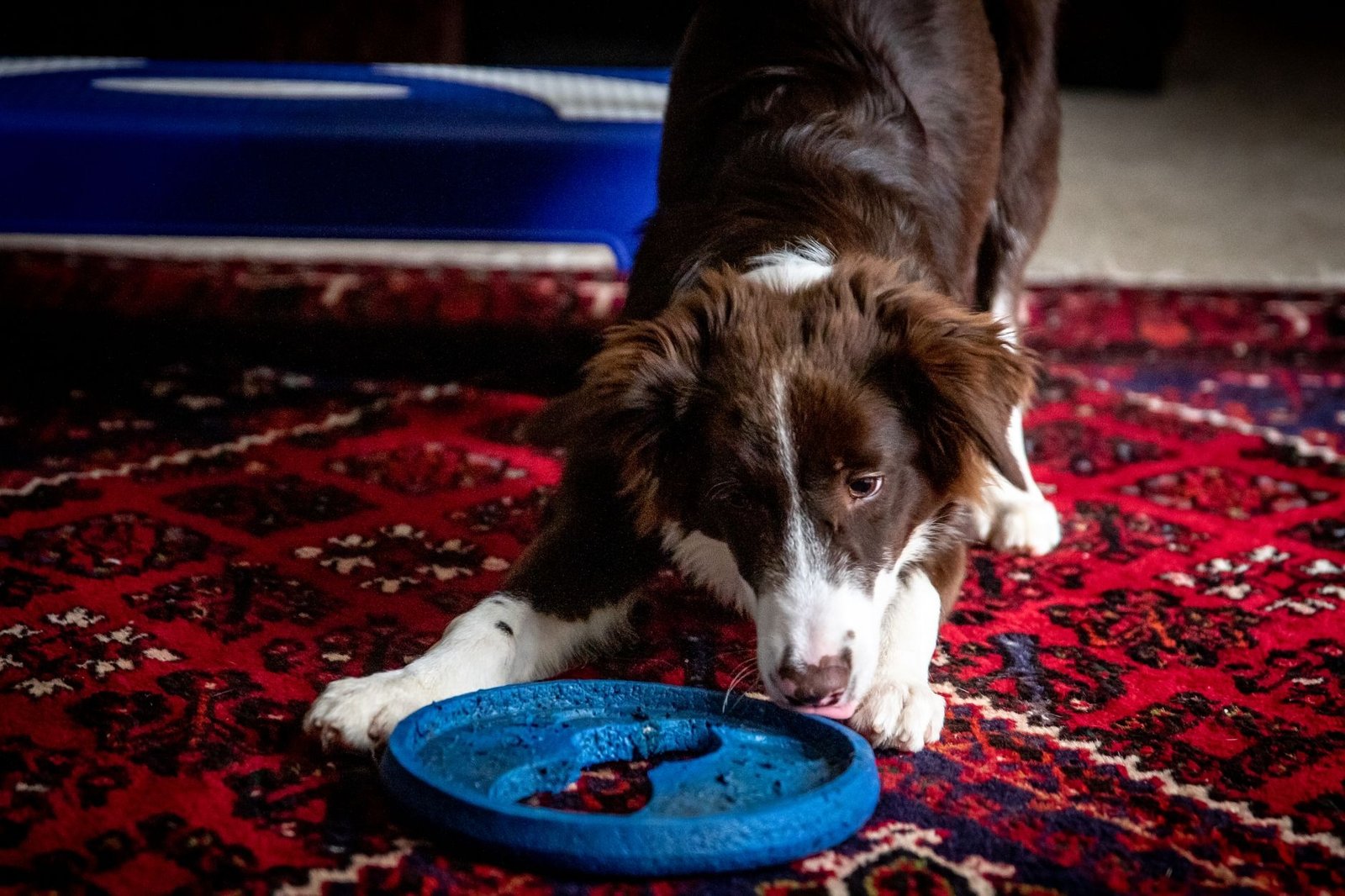
A raised food bowl has been a fixture of pet-store shelves for decades, sold on the promise that lifting a bowl off the floor is easier on a big dog's neck and joints, and — for years — recommended as one way to help prevent bloat in large breeds. It sounds reasonable. It's also not what the research on bloat actually points to, and it isn't the piece that matters most for a fast-eating cat, either. The variable tied to the outcomes owners are actually trying to avoid is eating speed, not bowl height.
The misconception: a raised bowl looks like the safer choice
Elevated feeders are usually pitched as a comfort upgrade first, and a health precaution second. For big dogs especially, the pitch has included bloat prevention specifically — the idea that a shorter reach to the bowl means less air swallowed and less strain on the stomach. For cats, the equivalent shortcut is usually just "a bigger bowl" or "free access to food," on the assumption that as long as the food is available, how fast it disappears doesn't matter much.
Both assumptions skip over the actual mechanism. What's linked to bloat risk in large dogs and to regurgitation in cats isn't the bowl's height or how much food is in it — it's the pace at which the animal eats.
Why it actually matters: eating speed, not bowl height
Gastric dilatation-volvulus (GDV, commonly called bloat) is a life-threatening emergency seen mostly in large and giant-breed dogs — Great Danes, Standard Poodles, German Shepherds, and other deep-chested breeds are typically named as highest-risk. The stomach fills with gas, distends, and can rotate on itself, twisting off its own blood supply along with the spleen's. The American College of Veterinary Surgeons lists GDV as one of the most urgent conditions in canine emergency medicine, because once the stomach twists, it requires immediate surgery to survive.
A widely cited Purdue University study — led by Dr. Larry Glickman's research group and published in the Journal of the American Veterinary Medical Association in 2000 — followed a large cohort of at-risk breeds to identify non-dietary risk factors for GDV. One of its more surprising findings: dogs fed from a raised bowl developed GDV at a higher rate than dogs fed at floor level. That's the opposite of what the raised-bowl recommendation had assumed for years, and it's a large part of why many veterinary sources have since walked the advice back. The same research flagged fast eating as one of several other risk factors worth watching. It's worth being precise here, though — later reviews of the broader GDV literature have found the evidence on eating speed by itself is more mixed and debated than the raised-bowl finding, with some studies showing a clear link and others showing none. Speed is a reasonable, low-effort thing to address regardless; it just isn't a single settled number the way some retellings of this research make it sound.
Cats face a related but different problem. Gulping food quickly is commonly linked to regurgitation shortly after a meal — food comes back up largely undigested, often within minutes of finishing. Fast eating also works against how a cat's feeding behavior actually evolved. The AAFP/ISFM feline environmental needs guidelines describe normal feline feeding behavior as hunting and foraging for small, frequent meals eaten in solitude, and Ohio State University's Indoor Pet Initiative notes that cats in the wild typically hunt several times a day, succeeding only about half the time. A bowl that delivers an entire day's calories in under a minute, with zero effort involved, skips that pattern entirely — which is part of why free-fed, fast-eating indoor cats are also more prone to overeating and weight gain.
The actual fix: target the speed, not the height
- For at-risk dogs, choose a slow-feed bowl over an elevated stand. Look for raised ridges or a maze pattern molded into the bowl itself — not a stand that lifts a regular bowl off the ground. This targets eating speed directly without reintroducing the raised-bowl variable that research has flagged as a concern in large and giant breeds.
- For cats, a shallow puzzle feeder or a snuffle mat works well. Splitting one bowl-dump into several small "hunts" throughout the day lines up with AAFP/ISFM guidance to feed cats in a way that requires some effort to access food, in smaller and more frequent portions.
- Introduce any slow feeder gradually. An animal used to an open bowl can get frustrated by ridges or a maze pattern at first and simply walk away. Start with a shallow, easy design and increase difficulty over days or weeks. Keep the total daily food amount exactly the same — a puzzle feeder changes how food is delivered, not how much of it there is.
FAQ
Is a slow-feed bowl enough on its own to prevent bloat?
No single product eliminates GDV risk. Slow feeding addresses one modifiable factor among several (breed, genetics, activity around mealtimes, and others also play a role), which is exactly why it's worth doing alongside — not instead of — other precautions your vet may recommend for an at-risk breed.
My cat still eats fast even with a puzzle feeder — what now?
Try a shallower difficulty level first, since a feeder that's too hard can push a cat to abandon it and go hungry between attempts, or split the same food across two or three separate feeders placed around the house so there's less to gulp in any one spot.
A dog with a hard, swollen abdomen, unproductive retching, or sudden restlessness needs an emergency vet right away — those are signs of GDV, not something to watch overnight. A cat that keeps regurgitating even after meals are slowed down, or that's losing weight, should also see a vet to rule out a medical cause rather than assuming it's purely an eating-speed problem.
Related articles
 4 min read0 views
Skipping a Safe Space Is Secretly Worsening Storm Fear
Comforting a scared dog doesn't reward the fear, but skipping a safe space during storms and fireworks can let that fear quietly build. Here's what helps.
 3 min read0 views
4 Signs Your Cat's Home Needs More Vertical Space
A bigger apartment doesn't automatically mean a happier cat. Here's why height matters more than floor space, and how to add it without a full room makeover.